The short answer
- 唔該 (m4 goi1) often thanks someone for a service or small favour. It can also politely get attention or soften a request.
- 多謝 (do1 ze6) often thanks someone for a gift, a compliment or something more personal.
Think about the situation, not a word-for-word translation. These are helpful beginner patterns, not a strict rule for every conversation.
At the café: 唔該
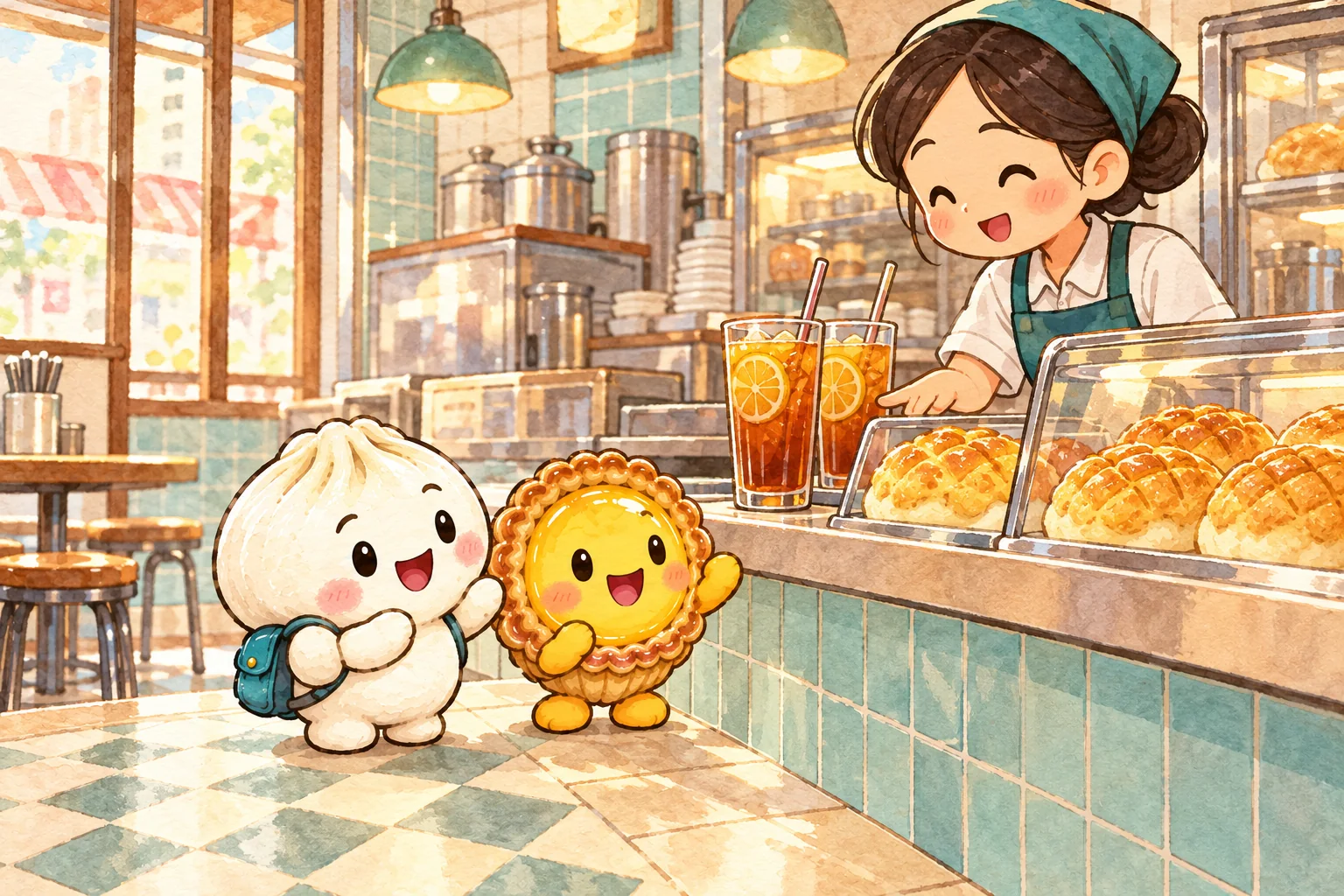
Bao is ordering a drink. Bao first uses 唔該 to speak politely to the server. After the drink arrives, Tart can use it to thank the server for helping.
Make a request
Thank for a service
Try it yourself: imagine a server brings your tea. Say 唔該 (m4 goi1) as you receive it.
A gift from a friend: 多謝
Now Bao gives Tart a book. Tart is thanking Bao for a present, so 多謝 is the natural starting choice.
Give a gift
Thank for the gift
You may also hear 多謝 when someone gives a kind compliment. A simple 多謝你 is a comfortable reply.
Quick check
- A café worker hands you a drink. What could you say?
- A friend gives you a birthday card. What could you say?
Show answers
1. 唔該 (m4 goi1). 2. 多謝 (do1 ze6).
Practise in a conversation
Our free 14-day course has short Bao and Tart dialogues, Jyutping and speaking tasks. Day 05 practises ordering a drink; Day 12 revisits thanks and sorry.
Start the free course →